
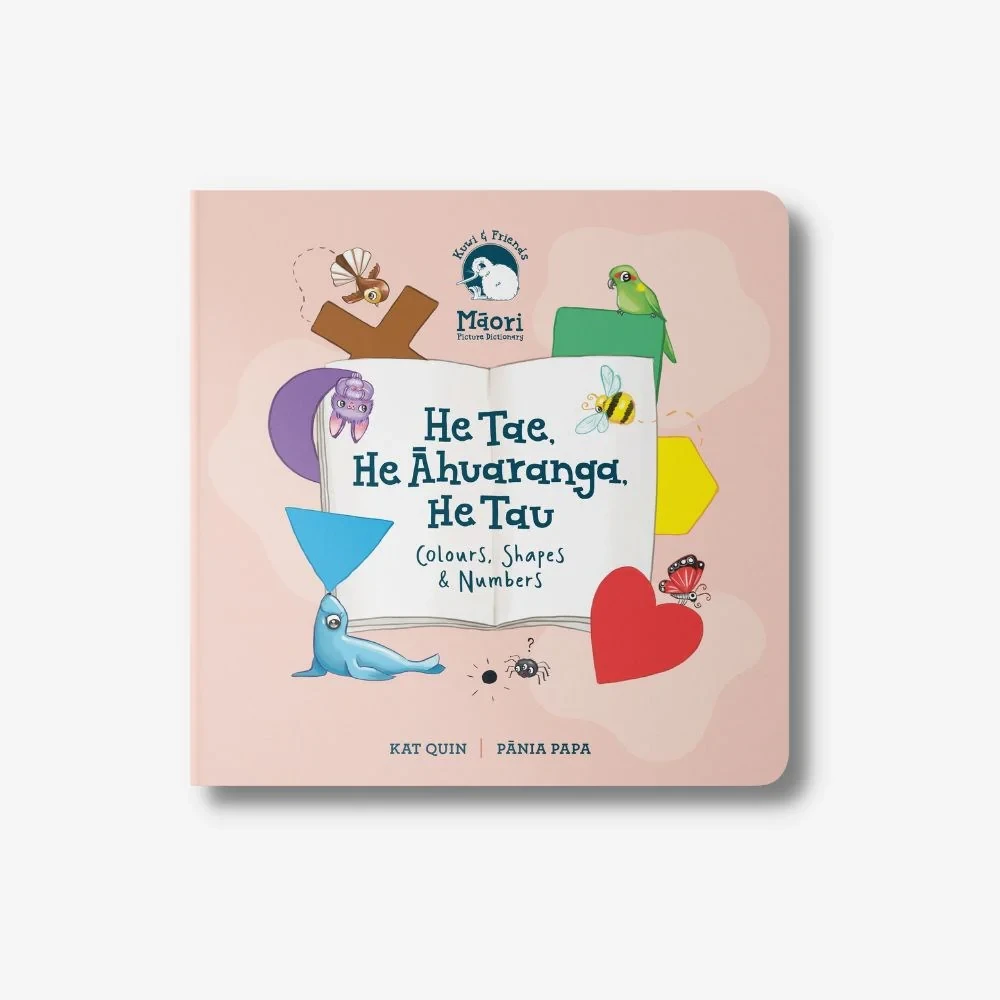
He Tae, He huaranga, He Tau - Colours, Shapes & Numbers
$15.99 NZD
Approx $9.32 USD
Description:
DIMENSIONS: 200 mm x 200 mm x 10 mmPAGES: 24
BIND: Lighter Weight Board Book
He Tae, He Āhuaranga, He Tau - Colours, Shapes & Numbers
In learning the Māori language, He Tae (Colours), He Āhuaranga (Shapes), and He Tau (Numbers) form the foundation for expressing a wide range of ideas, objects, and concepts. Understanding these basic components allows learners to describe the world around them, whether it’s through identifying the colour of an object, the shape of something, or counting items. These terms are commonly used in both everyday conversations and more formal settings, making them an essential part of becoming fluent in Māori. In this guide, we’ll explore key vocabulary and the significance of colours, shapes, and numbers in the Māori language.
He Tae - Colours
In Māori, colours are used not only to describe the appearance of objects but also to express emotions and convey symbolism. Each colour has its own cultural significance, making it an important aspect of communication and understanding. Below are some of the most commonly used colour words in Māori:
-
Whero (Red):
Whero is the word for red. It often symbolizes strength, passion, or energy. It can also represent danger, as seen in traffic lights or warnings.
-
Kākāriki (Green):
Kākāriki refers to the colour green, which is closely associated with nature, plants, and the environment in Māori culture. It symbolizes growth and vitality.
-
Parauri (Brown/Black):
Parauri means brown or black and is often associated with the earth, grounding, and stability. It is a colour found abundantly in nature.
-
Māmā (Light/White):
Māmā refers to light or white, a colour that signifies purity, new beginnings, or clarity. It can also denote a calm or peaceful state.
-
Aroha (Pink):
Aroha is used for pink, often connected to love, warmth, and compassion. It’s a softer colour that conveys kindness and affection.
-
Kākā (Yellow):
Kākā means yellow, a vibrant colour often associated with energy, happiness, and sunshine.
-
Blue (Parauri/Purākau):
There are several Māori words for blue, depending on its shade and context. Purākau may refer to a deep, sky-like blue, representing openness and freedom.
He Āhuaranga - Shapes
He Āhuaranga (shapes) are used to describe the form of objects, helping to define and differentiate various items in the environment. Shapes are essential for communicating the structure of an object or the layout of something. Here are some common shape terms in Māori:
-
Porotaka (Circle):
Porotaka means circle, a shape with no corners or edges. It symbolizes wholeness and eternity, as the circle has no beginning or end.
-
Tōrino (Triangle):
Tōrino refers to a triangle. This shape is often associated with strength, as seen in the structure of a pyramid or a mountain.
-
Tākoro (Square):
Tākoro is the word for square. This shape is commonly used in everyday life, from windows to tiles, symbolizing balance and stability.
-
Rōreka (Rectangle):
Rōreka refers to a rectangle. While not as symmetrical as a square, it is a practical shape used in many contexts, such as books, phones, or buildings.
-
Mātāhū (Oval):
Mātāhū refers to an oval, a shape similar to a circle but elongated, symbolizing motion or flexibility.
-
Tewhā (Star):
Tewhā is used for a star shape, representing guidance, hope, and aspiration.
-
Hūhā (Heart):
Hūhā means heart and is universally known as a symbol of love, emotion, and connection.
He Tau - Numbers
He Tau (Numbers) are crucial in both everyday conversations and formal settings. Numbers in Māori are not only used to count but also in cultural practices, rituals, and storytelling. Understanding the basic numbers in Māori forms the foundation for more complex arithmetic and everyday interactions.
-
Tahi (One):
Tahi means one, the first number in the Māori numerical system. It represents unity and singularity.
-
Rua (Two):
Rua refers to two. It is commonly used in pairs, whether it's two people, objects, or ideas.
-
Toru (Three):
Toru means three. This number is often used in Māori traditions, such as the concept of "Te Whare Tūpuna" (the three pillars of the house).
-
Whā (Four):
Whā means four. It can symbolize balance, as four corners make up a stable base.
-
Rima (Five):
Rima refers to five. It’s the number of fingers on one hand and is often used in traditional counting and everyday life.
-
Ono (Six):
Ono means six. It can represent completeness or wholeness in Māori belief systems.
-
Whitu (Seven):
Whitu is seven. In Māori culture, this number is significant in various traditions and ceremonies, such as the "whitu o ngā rangi" (seven days of the week).
-
Waru (Eight):
Waru means eight. It represents a sense of infinity or abundance, as the number eight often symbolizes cycles or movements.
-
Iwa (Nine):
Iwa refers to nine. This number can symbolize progression or steps toward completion.
-
Tahi-tekau (Ten):
Tahi-tekau is the word for ten, which is used as a base number in Māori counting. Beyond ten, the system involves combinations of tekau (ten) and smaller numbers.
Benefits of Learning He Tae, He Āhuaranga, He Tau
-
Increased Vocabulary: By learning the words for colours, shapes, and numbers, learners will expand their vocabulary and
become more adept at describing the world around them.
-
Improved Communication: Mastering these basic terms allows learners to converse more effectively in everyday situations,
whether in the classroom, home, or community settings.
-
Cultural Connection: Understanding colours, shapes, and numbers in Māori also provides a deeper connection to Māori
culture, where these elements are rich with meaning and symbolism.
-
Practical Usage: These terms are frequently used in various real-world applications, from teaching children to reading
signs and labels to understanding stories and traditions.
Conclusion
He Tae, He Āhuaranga, and He Tau are foundational elements in learning Māori. They are essential for describing the world around us, expressing ourselves clearly, and deepening our understanding of Māori culture. Whether you’re learning the names of colours, identifying shapes, or counting, these terms provide a robust base for language development and everyday conversations. By incorporating He Tae, He Āhuaranga, and He Tau into your learning, you’ll be able to express yourself more fully and appreciate the depth of the Māori language.